Overview
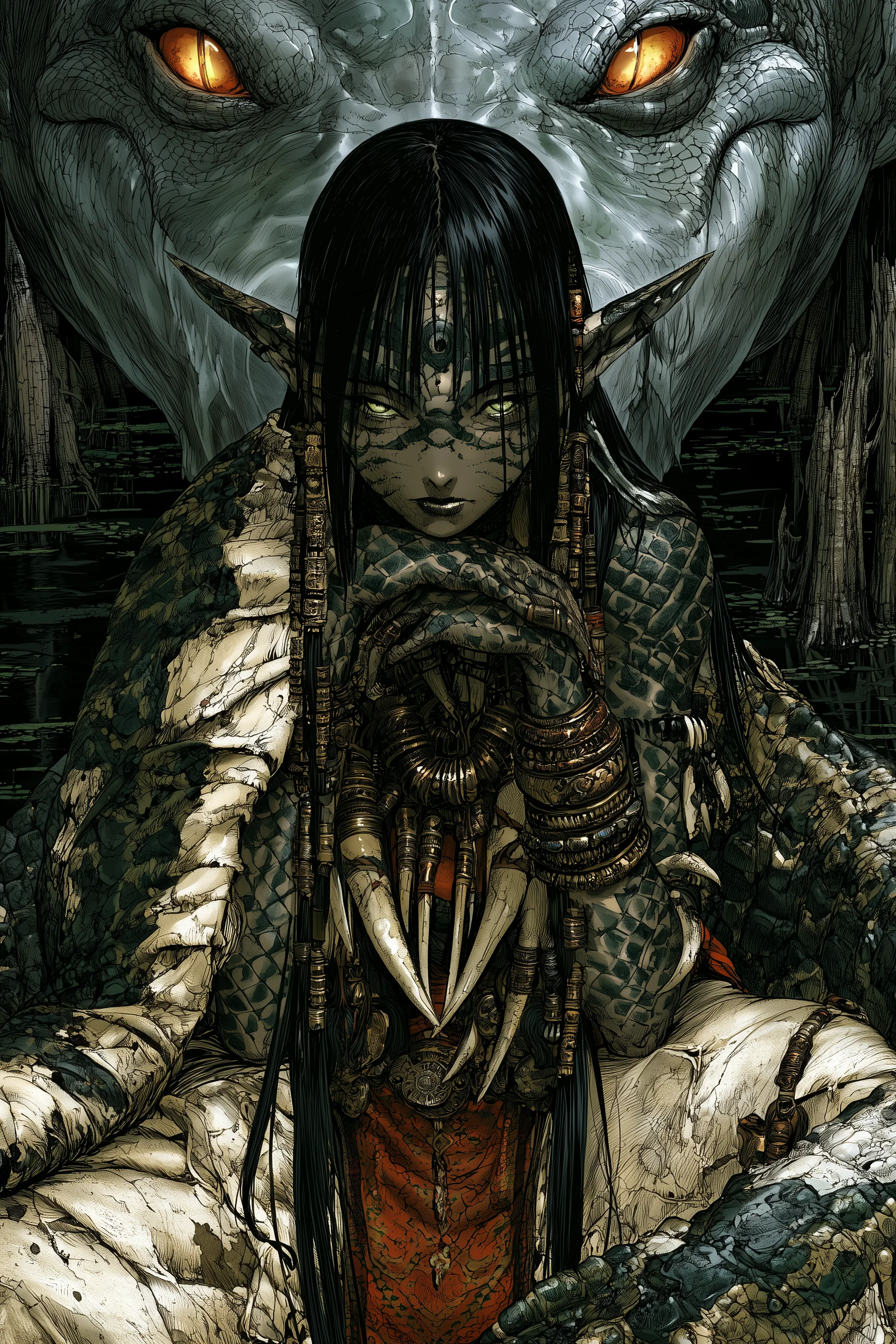
The vast marshlands of north-central Mundu bear two names. Outsiders (particularly merchants and cartographers who have mapped the region's edges without ever daring to enter it) call it Sovajadan, after Sovaj Prathama, the plains farmer-general remembered for leading four thousand refugees out of these marshes in the terrible years after the Catastrophe. The Murelf consider the name an insult twice over: a coloniser's label, and a label taken from the man most famous for leaving. They call their home Haritkshetra, the Verdant Expanse, and the distinction matters: Sovajadan is a line on a map; Haritkshetra is a living entity.
The marshlands stretch across mangrove forests, fenland, river deltas, and flooded plains in a shifting patchwork that changes with the seasons. Every road floods. Every dry path shifts. The water itself is hostile: parasites, toxic algae, and predators adapted to hunt in the shallows make travel without local knowledge a death sentence. This has been true since before the Murelf arrived here, and the Murelf have spent millennia making it considerably worse for anyone they don't want present. Their relationship with the marsh is not magical in the way a wizard's spell is magical — it is symbiotic, ecological, rooted in relationships that the Fading does not touch. The marsh's magic doesn't decline with the Ley-Loom because it was never that kind of magic to begin with.
Haritkshetra has never been successfully invaded. Every army that has entered the marshes has been destroyed. The Murelf don't fight conventional battles: they dissolve into the environment, let the marsh do the killing, and emerge when the last invader has drowned. Their clan structure is territorial and isolationist, with each clan answering to its own Clan Mother and making its own decisions about who lives and who feeds the crocodiles. They cannot be negotiated with as a unified polity because they are not one — and that political fragmentation has historically been the decisive factor in their military invincibility.
The Worst Year, and All the Others
The marsh's worst year was its third. In the chaos after the Catastrophe, when the mad goddess of the waters dragged herself through the northern marshlands, ground liquefying where she touched, water rising where she screamed, a plains cattle farmer named Sovaj Prathama led four thousand refugees out alive, reading a warring god the way he read distressed herds. He was murdered in his sleep four years later, over grazing rights, by a merchant whose toll-road still taxes Sovaj's branded descendants. The marsh named nothing after the merchant.
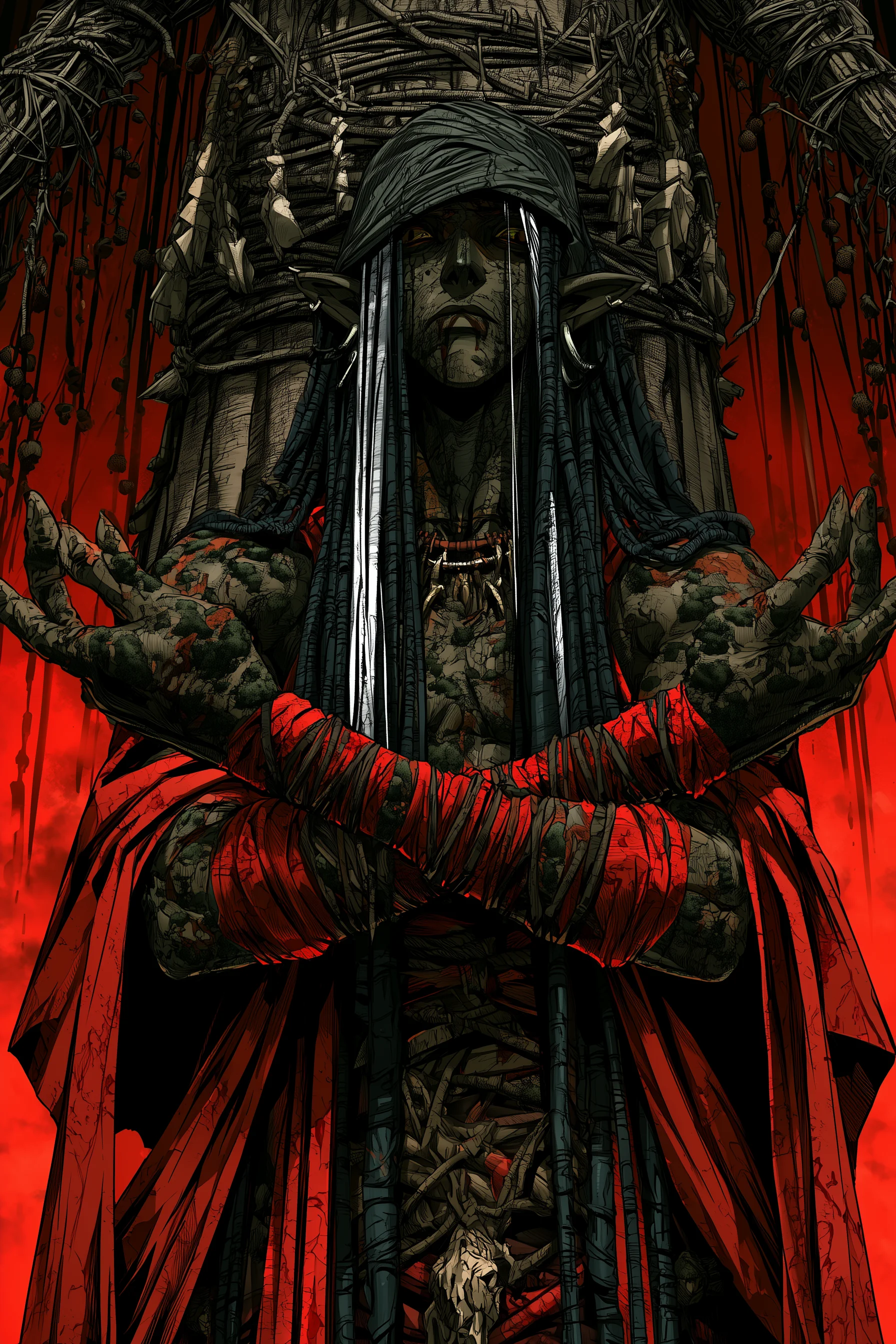
The marsh remembers that year as two religions. One priesthood keeps the rites of the water that destroyed; the other keeps the rites of the water that wept; and the two do not speak, though they draw from the same channels and bury in the same groves. Outsiders who ask which one is right are told, gently, that the question is the one thing both priesthoods forbid.
Every later invasion fared worse. Dhruva VIII conquered the marsh's edges on parchment and never held a hundred yards of actual water. The Murelf do not fight invaders in any sense an invader would recognise: they dissolve, the marsh does the killing, and the clans emerge when the last stranger has drowned.
Geography & Climate
The Haritkshetra is not a single biome but a complex of overlapping wetland ecosystems. Mangrove forests fringe the coastlines and river mouths, their tangled root systems creating underwater labyrinths. Inland, these give way to open fenland and reed marshes, punctuated by isolated elevated platforms of ancient, water-resistant tree growth where the Murelf build their living settlements. River deltas sprawl across the southern reaches, constantly reshaping as silt deposits redirect channels that were established trade routes the year before.
Seasonal flooding transforms the region dramatically. During wet season, areas that appear as dense forest become navigable waterways; during dry season, channels that shallow-draft boats relied upon become impassable mud. The Murelf maintain mental maps of this complexity through a technique called Channel Memory — encoded in specialized knots and weavings as well as in the minds of specialists who dedicate their lives to tracking the marsh's rhythms. Navigation without this knowledge is not merely difficult. It is fatal.
Fungal networks run through the entire region beneath the waterline and through the root systems of the marsh's enormous trees. These networks are older than any surface structure and serve as both information infrastructure and ecosystem support — the Murelf have learned to read them the way others read roads. When an army enters Haritkshetra, every clan within fifty miles knows its size, composition, and direction of travel within hours through these biological networks.
Settlements
Verdant Depths — The Living Capital
Rising organically from the central marshlands like a living extension of the environment, Verdant Depths consists entirely of structures grown rather than built — massive hollowed trees connected by living bridges, platforms suspended from branches by vines that adjust tension with the seasons, and partially submerged dwellings that rise and fall with water levels. Its location shifts with the marsh's seasonal rhythms; finding it without a Murelf guide is a death sentence. Outsiders who have been brought here under escort describe a sense of the city emerging from the marsh rather than being constructed within it.
The settlement follows the natural contours of a massive cenote where seven underground springs create stable water levels. The central island is accessible only by swimming through underwater tunnels or crossing heavily guarded living bridges, containing the sacred Grove of Remembrance where magical knowledge is preserved through tree-carving and ritual embedding. Human visitors are confined to specific dry sections until they prove their trustworthiness through services to the community.
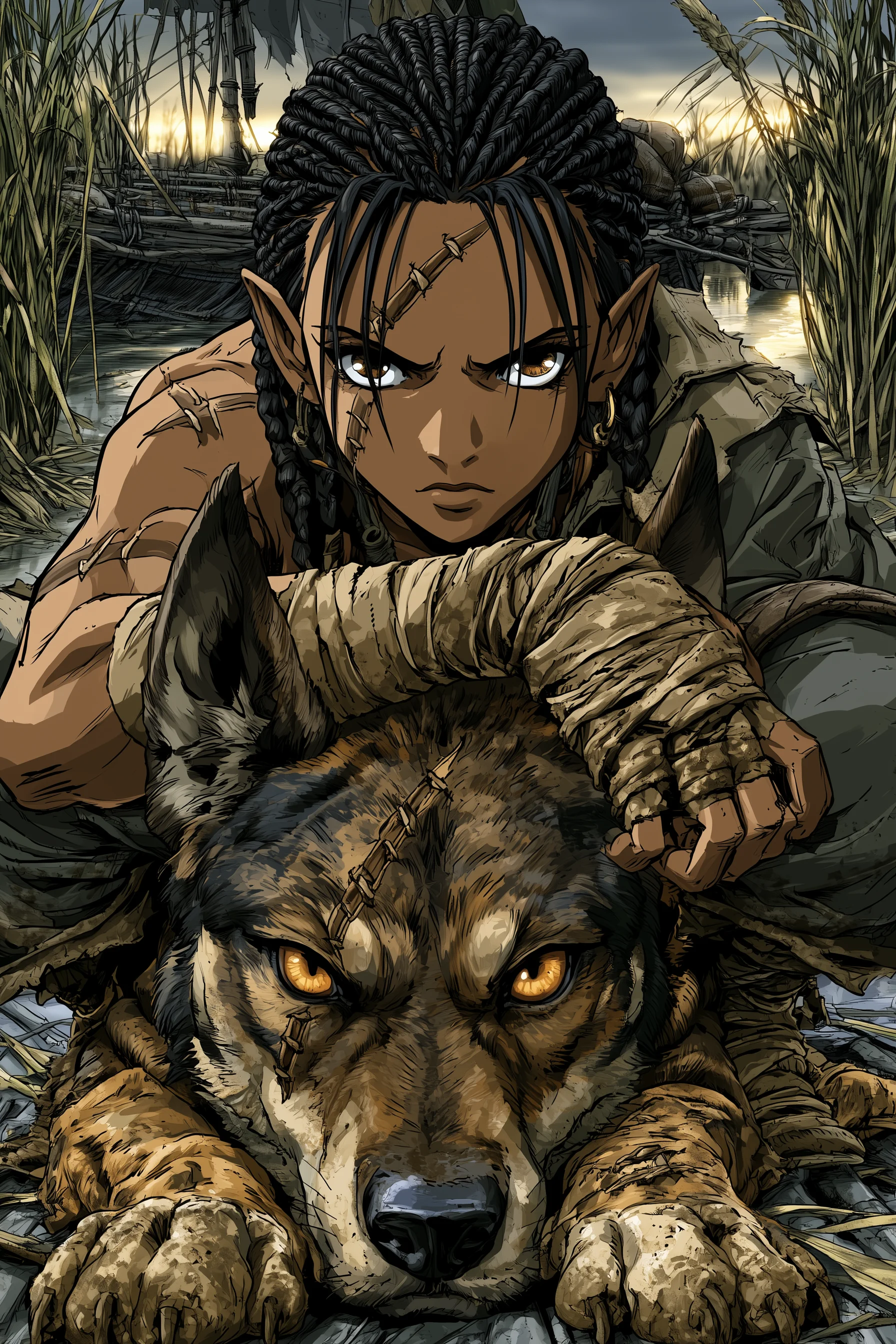
Verdant Depths maintains the most extensive predator-bond network in Haritkshetra, with specialized canals and nesting areas integrated throughout the settlement for bonded crocodiles. Young Murelf undergo the First Swimming — a ritual where they establish lifelong connections with crocodile hatchlings, creating partnerships that enhance both parties' natural capabilities.
Fangmeet
A village of Murelf living in symbiotic relationship with seventeen distinct families of marsh crocodiles. Structures feature underwater access points for crocodile movement and integrated nesting chambers within family dwellings. The bond-training system here allows for deep communication and cooperation between elves and reptiles — the crocodiles serve not just as defenders and hunters but as magical sensors, demonstrating unique sensitivity to harmonic instabilities that the Murelf have learned to interpret. High Master Scaleheart maintains the strongest connection to the eldest crocodile matriarch.
Riverweave
Built at the junction of five major marsh channels, Riverweave functions primarily as a trade and transportation hub. Its signature creation is the water map — a specialized system of encoded knots and patterns documenting navigable channels, underwater hazards, and areas of remaining magical activity. Council head Reedsinger maintains the Channel Memory: a mental technique for memorizing hundreds of miles of marsh waterways and their changing conditions. The most valuable guide in the Haritkshetra is one who knows what Reedsinger knows.
Willowbank
The largest mixed human–Murelf settlement of the region, grown from a Murelf refuge at the Weeping Spire into the town where the plains roads meet the marsh. Three districts, three eras: stone on the old foundations, timber platforms over the water, and drained ground the old families say should never have been dry. The Murelf remember they came here first. Willowbank in full.
Culture & Society
Murelf society judges actions through the lens of territorial integrity and environmental balance. Their ethics emphasise clan loyalty above all else, with concepts of right and wrong often stopping at clan boundaries. The phrase "Right flows like water" (Jalasama-nyaya) captures their belief that morality must adapt to circumstances rather than remaining rigidly defined. An action that would be monstrous in Torkradha might be entirely appropriate within the context of marsh survival, and the Murelf do not feel obligated to apologise for the discrepancy.
The predator bond is the defining social institution of Murelf life. A Murelf without a bond is a diminished person — pitied rather than condemned, but undeniably lesser in the eyes of their community. The strength of one's bond, and the status of one's bonded creature, determines standing in Murelf hierarchy more reliably than any other factor. Clan Mothers who have bonded with elder crocodile matriarchs speak with a kind of authority that transcends political appointment.
Visitors from outside the Haritkshetra are assessed carefully before being granted any trust. Dun'elfata traders from Marusthali receive relatively warm receptions due to longstanding desert-marsh trade agreements — an unusual alliance of geographic extremes. Plumaj visitors are welcomed with surprising warmth for their aerial perspective, which proves valuable for early warning of approaching threats. Human merchants are tolerated in designated waterway hamlets. Uninvited parties of armed travelers are not.
Flora & Fauna
Gulping Reed
Carnivorous plants with mouth-like openings that snap shut when triggered. Once magical, now operating through sophisticated mechanical trap mechanisms. Large specimens can catch birds and small mammals; they grow in clusters that create effective perimeter warnings around Murelf settlements.
Memory Fish
Schools of fish with distinctive migration patterns that navigate changing marsh channels through collective behavior rather than magical senses. Their scales change colour based on water quality, serving as natural indicators of environmental health that Murelf communities have learned to read at a glance.
Chorus Frogs
Amphibians whose precisely timed calls create complex acoustic patterns that stabilize local magical fluctuations — one of the few animals actively countering magical decline. Marsh shamans interpret their calls as predictors of magical instabilities; sudden silence serves as a warning of dangerous fluctuations approaching.
Mire Snails
Gastropods whose shells incorporate tiny amounts of residual magic, leaving iridescent trails that temporarily strengthen magical effects nearby. Careful cultivation of these snails helps maintain essential magical pathways through otherwise unstable marsh areas. Their shells are highly valued by collectors.
Marsh Crocodiles
The defining fauna of the Haritkshetra. Bonded specimens serve as defenders, hunters, transport, and harmonic instability sensors for Murelf communities. Unbonded wild crocodiles in the deep marsh reach sizes that strain credibility — there are things in the deeper channels that the Murelf themselves navigate around rather than through.
Marsh Trolls
Regional troll variant that has developed symbiotic relationships with certain fungi that enhance their diminishing regenerative capabilities. Their skin often visibly hosts these symbiotic organisms. The Murelf tolerate marsh trolls within established territories, occasionally engaging in careful trade of fungal specimens for other goods.
Threats & Dangers
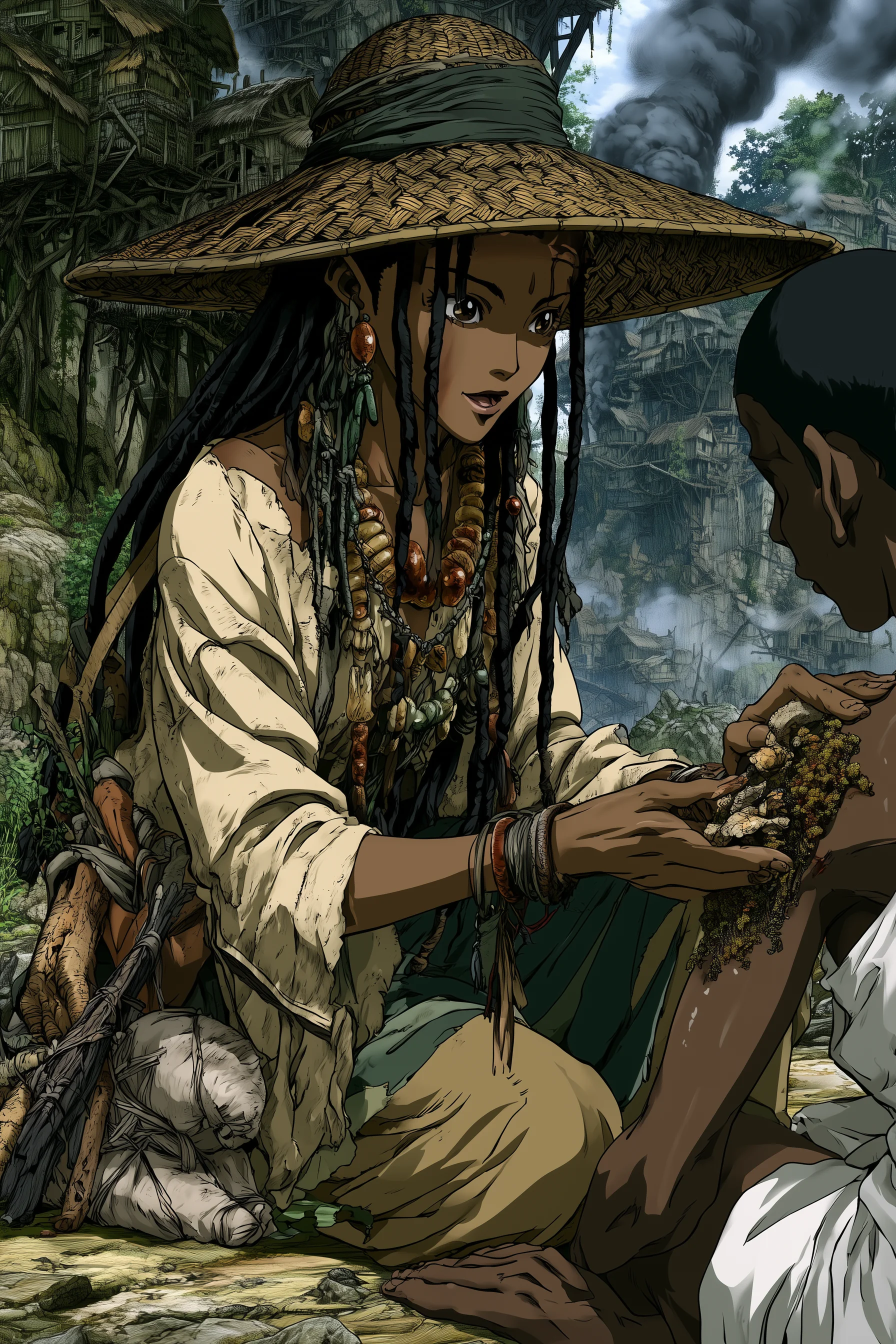
The Haritkshetra's dangers are not concentrated in any single threat — they are distributed across every aspect of the environment. Parasites in the water cause fever, delirium, and death within days without treatment. Toxic algae blooms appear without warning in channels that were clean the previous morning. The terrain actively deceives: firm ground becomes quicksand; visible paths become underwater passages when the water level shifts overnight. The trees themselves, under shamanistic influence, close paths behind advancing parties who haven't been invited.
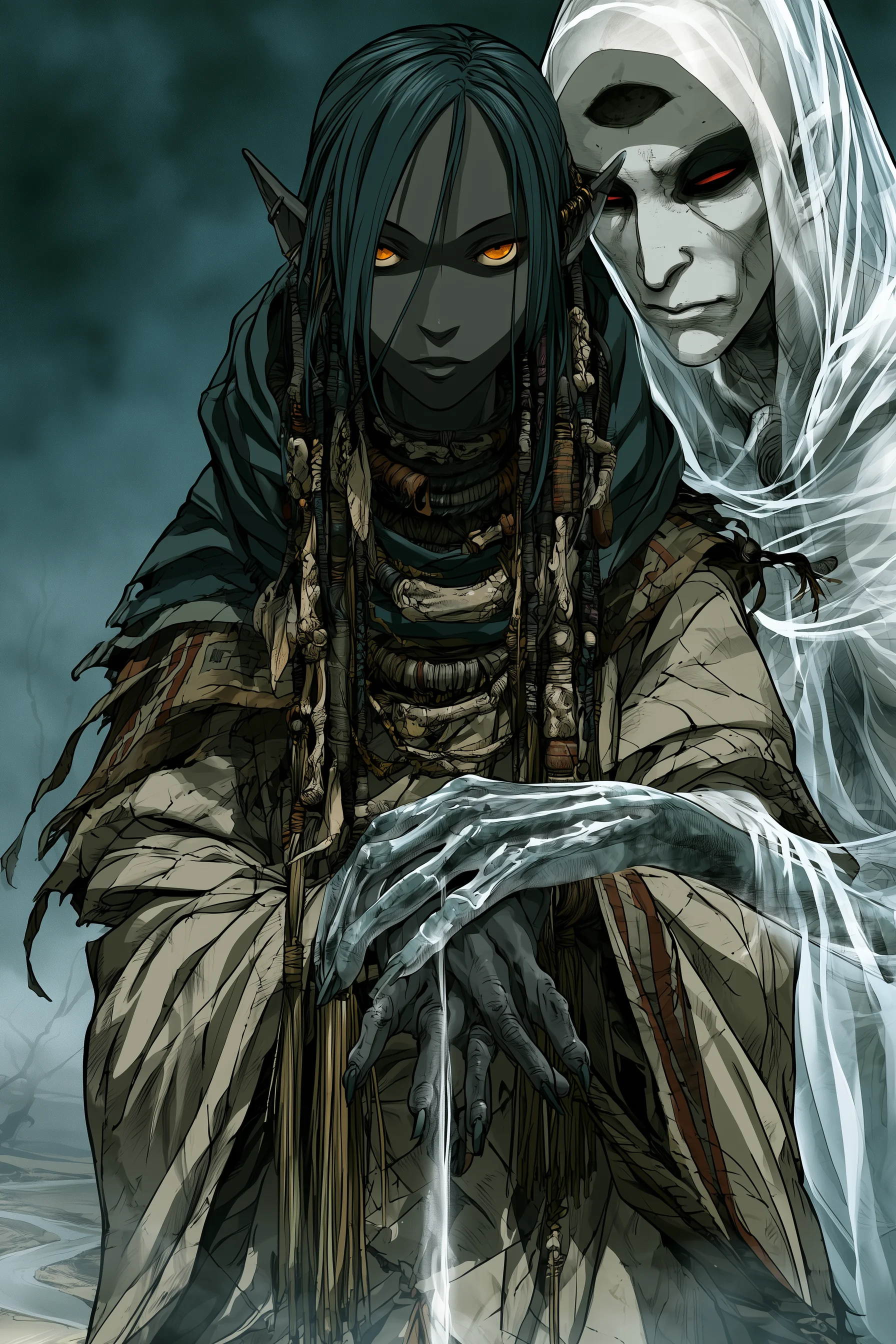
The bonded crocodiles are the least of the problems. The fungal spore networks can track intruders across miles of marsh. Spirit Warrior shamans communicate through the predator-bond network with the precision of military commanders. The larger, unnamed things in the deep marshes are not bonded to anyone and serve no one's interests but their own.
For those who somehow manage to reach a Murelf settlement without being killed by the environment, the social dangers are equally significant. Clan law operates differently from the legal frameworks of other regions, and violations are adjudicated immediately and without appeal. The concept of "mercy" in the Murelf legal tradition is narrowly defined and clan-specific. Outsiders who cause harm within Murelf territory discover that the marsh has an excellent memory.
At the Table
For the table: Riverweave's traders are offering rare open passage to outsiders who can carry cargo the spore networks will not track, and will not say what the cargo is. An outlander who caused harm in clan territory is holed up on dry ground begging extraction before Murelf adjudication finds him; clan law has no appeal, and the marsh has an excellent memory. And an elder at Verdant Depths wants a memory fish taken alive from a channel that bloomed toxic overnight — what the fish remembers is worth more than what the water costs.
Gallery