Overview
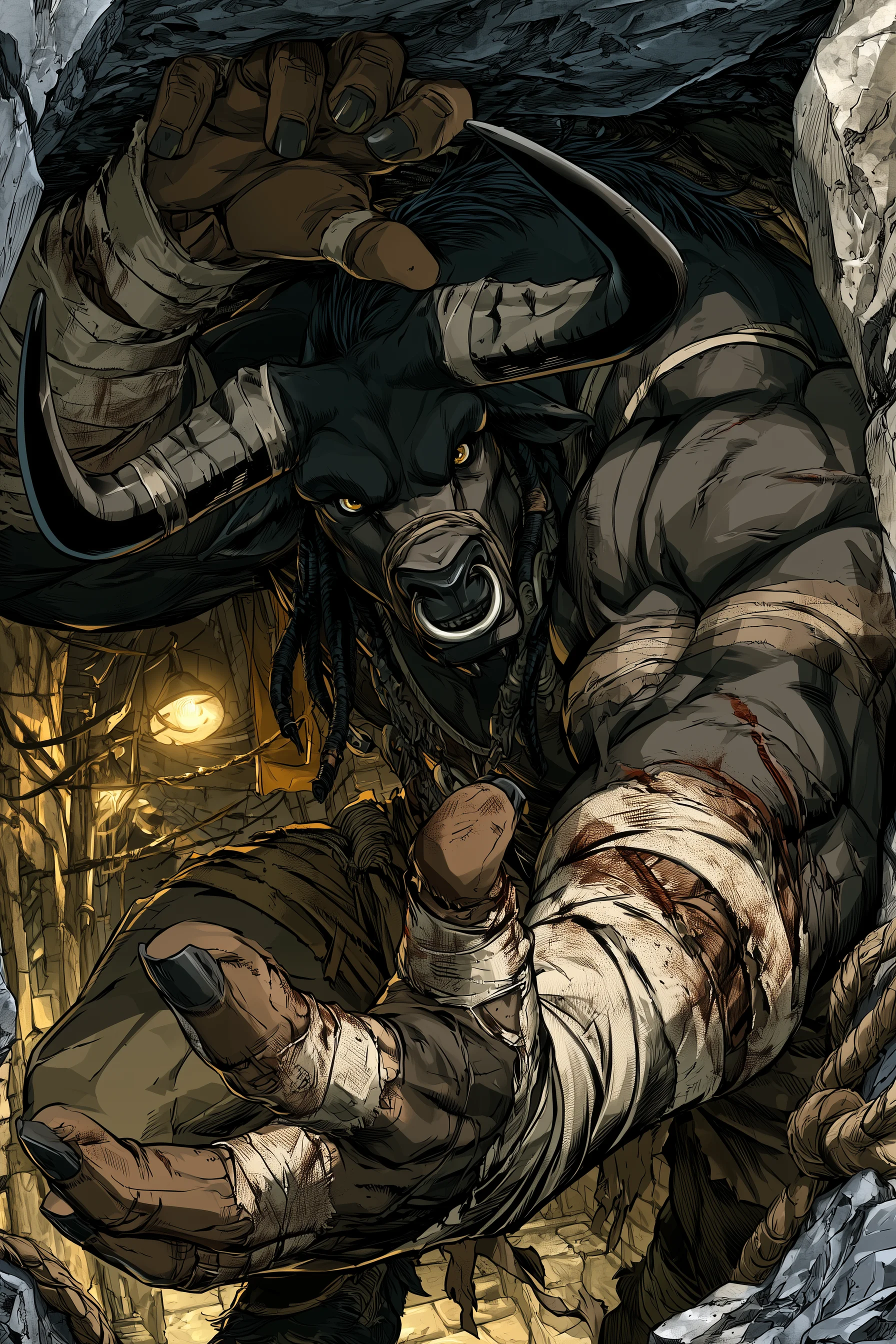
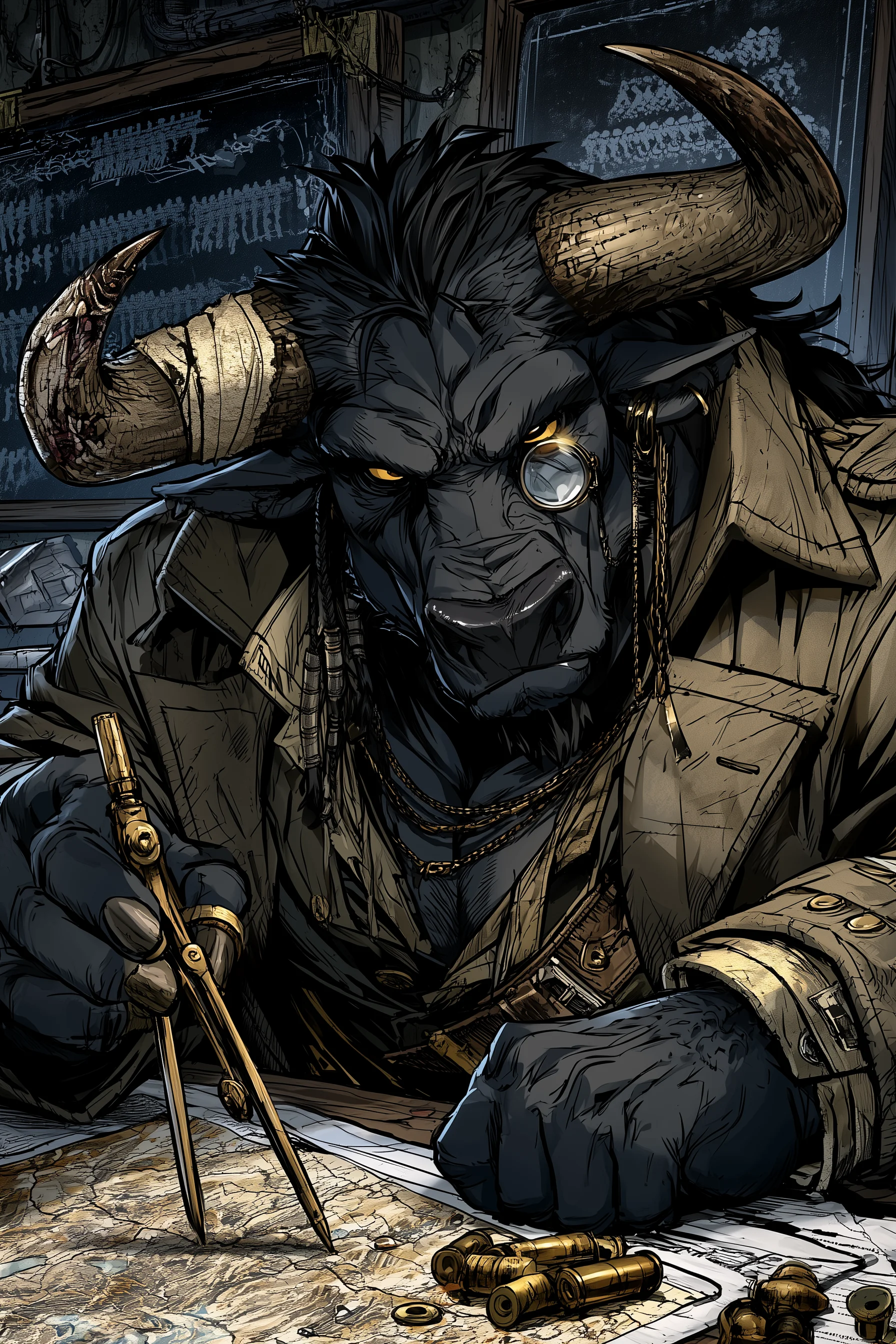
In a world scrambling to adapt to fading magic, Khaardha stands apart — not because its people have found a way to preserve magic or slow its decline, but because they abandoned it entirely, long before the decline began in earnest. Shielded by the jagged peaks of the Vajrashring Mountains and the thick, ironwood-filled expanse of the Orrak Wilds, the minotaur kingdom has spent centuries developing mechanical systems of such sophistication that the absence of magic has become their greatest advantage. When other nations struggle to maintain infrastructure built on arcane foundations, Khaardha's bridges of interlocked gears continue to turn, its pressure-driven water systems flow without interruption, and its mechanical sentinels patrol without faltering.
The realm's name, Khaardha, evolved from the original minotaur designation K'harak-To'or ("Iron Gate") through centuries of trade contact that gradually smoothed the hard consonants into something outsiders could pronounce. Its capital, Torkradha, took the same root; and outland traders, muddling the two, still call the whole place Kharagduar. The minotaurs correct them, every time: Khaardha is the kingdom, Torkradha its forge-heart. Khaardha controls access to the north-western approaches of Mundu, and its gates, both literal and figurative, open for almost no one. Information flowing in or out of the dominion is strictly regulated, and the Assembly of High Artificers maintains a monopoly on knowledge that makes even the Ísvaktar's secretive tendencies look mild by comparison.
For all its walls, Khaardha is no hermit kingdom. It is the foremost industrial and engineering power on Mundu, and it trades on that footing everywhere: iron and worked steel, precision machinery, crystal-resonance engines, the tireless labour of its Mechanical Sentinels. The trade is ancestral: the minotaurs descend from the working castes of an older world, the hands that forged and hauled and kept the accounts, and they have dealt with the Azduar forges of the Lohadhri since before the Mist rose. What Khaardha will not sell is the how. Every mechanism leaves the dominion sealed; every schematic, every augmentation technique, every crystal secret stays behind the Iron Gate. It is open in commerce and closed as a fist about its methods — and the Information Control Protocol that keeps it so is enforced as strictly as any patent law in the undercity.
What little the outside world knows of Torkradha comes primarily through the Iron Mind program — a long-running initiative that selects promising human youths for specialised technical training in Torkradha's facilities, then returns them to human society as vectors for minotaur engineering paradigms. Every Iron Mind graduate builds minotaur-designed systems, uses minotaur-standard components, and creates dependencies that have operated for over two thousand years. The dependency is now structural. This is not generosity. It is investment.
Geography & Climate
The Vajrashring Mountains ("Storm-crag Mountains" in the old minotaur tongue) form a natural fortress wall around Torkradha's heartland. The peaks are formidable even by Uttaragiri standards in places, though the inhabited valleys between them maintain a more temperate climate than the frozen north. Persistent cloud cover and frequent electrical storms give the range its name, and the weather serves Torkradha's interests well: the approaches are difficult to navigate without local knowledge, and the storms disrupt magical wayfinding methods that might otherwise guide unwanted visitors.
The Orrak Wilds, a vast ironwood forest of unusual density, forms the western buffer zone. Ironwood trees, as their name suggests, grow timber of exceptional hardness and weight; a fully mature specimen requires specialised mechanical saws to fell, which incidentally means that only Torkradha possesses the tools to harvest the forest at scale. The Wilds harbour creatures adapted to the region's peculiar magnetic anomalies and reduced magical presence, creating an ecosystem unlike anything found elsewhere on the continent.
Torkradha itself sprawls across multiple levels of a vast canyon system, with the surface city giving way to subterranean forge complexes that extend deep into the bedrock. The engineering of the undercity is among the most impressive works of mortal construction on Mundu — and the most stratified. The deeper you go in Torkradha, the less pleasant your circumstances are likely to be.
Settlements
Torkradha — The Mechanical Capital
A labyrinthine metropolis of towering basalt fortresses and sprawling subterranean forges, Torkradha evolved from the original settlement of Tor-Kra'dos across centuries of expansion. The surface city is impressive: bridges of seamlessly interlocked gears and cogs span massive canals, mechanical sentinels four metres tall patrol the main thoroughfares, and clockwork communication networks carry messages faster than any magical relay system currently functional on the continent.
The city's social geography is vertical. Upper levels house the Assembly of High Artificers and the innovation guilds. Middle levels contain the productive workforce (engineers, machinists, metallurgists) who form the backbone of minotaur society. The labyrinthine underbelly, deep in the canyon and underground, houses those who have failed to contribute sufficiently to the dominion's advancement. Conditions there are deliberately uncomfortable. This is policy, not oversight.
The current Overforged Tyrant, Kharax the Unyielding, maintains strict control over mechanical innovations. All significant inventions must be registered with the Assembly before implementation. Patent law in Torkradha is enforced by the sentinels, and disputes are settled with a finality that discourages further argument.
The Gate Fortresses
A ring of fortified installations, the Vajra-nakas, controls the mountain passes into Khaardha territory. These are not merely checkpoints — they are self-sufficient communities capable of sustaining indefinite siege without resupply, built to the same redundant-systems engineering philosophy that governs all of Khaardha's critical infrastructure. Between garrison, engineers, and the households that keep them running, the fortresses hold a standing population in the thousands. Visitors who arrive without prior diplomatic arrangement are turned away. Those who attempt to bypass the gate fortresses discover the limitations of their approach in ways they are unlikely to repeat.
Lohdhwani — The Anvil-Towns
Strung along the canyon floors below Torkradha and climbing the terraced slopes above them, the Anvil-Towns are where Khaardha actually makes things. The name means iron-voice, for the ceaseless ring of the forges that never fully quiet. The subterranean levels house the great pattern-foundries, whose heat is piped upward to warm the surface towns; the surface towns, in turn, are architectural marvels in their own right, all buttressed basalt and gear-driven cranes. Between the two, Lohdhwani turns raw ore into the machinery the dominion sells and never explains.
The Chakrayana Depots
Where the interlocking canals and gear-driven haul-lines meet the outer roads, the Chakrayana Depots handle everything leaving or entering Khaardha by cargo. The name means wheel-journey, and the depots are exactly that: marshalling yards of clockwork cranes, sealed-crate warehouses, and the checkpoint offices that log every mechanism out and inspect every visitor in. Modest in population but vital in function, they are the last minotaur-controlled ground a Khaardha product touches before it becomes someone else's dependency.
The Price of the Ascent
Khaardha's histories are precise about their wars and quiet about their costs, and the Tyrant Wars are where the quiet is loudest. When the succession failed, the three-claimant civil war ran fifty years, and it was won underground: eighteen months of tunnel logistics no High Artificer could map, run by Relegated Commander Lohashram, illiterate, undercity-born, first sunlight at fourteen.
His reward was reassignment to the smelting pits. He died at forty-three of smelter's lung, and his pry-bar was melted for scrap while the Assembly's planners put their names on his maps. The undercity has never needed the story written down.
Three times the Relegated have risen: the demobilised war-guides' petition, crushed; the ventilation strike; and the Third Kradhar Rising, when eighty thousand coordinated the largest work stoppage in Torkradha's history and the city above went dark in hours. The official chronicles record all three as resolved. The word carries a particular weight in Khaardha, where everything is engineered, and resolved is what you call a stress until the next inspection.
Culture & Society
Unencumbered by magical influences, the minotaurs of Torkradha view right and wrong through a lens of pure rationality. Their ethics emphasise logical consistency, precision, and mechanical truth. A solution is good if it functions reliably; a person is valuable if they contribute meaningfully. This sounds simple, even appealing, until you consider what it means for those who cannot contribute — which is to say, until you visit the undercity.
The meritocratic hierarchy is genuine in its stated form: status derives from intellectual contribution and innovation, not birthright. In practice, access to the education and resources required to demonstrate intellectual contribution is itself stratified, creating a system that reproduces class structures as effectively as any aristocracy, but with the philosophical advantage of being able to point to occasional exceptions who clawed their way upward as evidence of the system's fairness.
Minotaur speech patterns tend toward methodical delivery with minimal emotional inflection, often incorporating mechanical metaphors and mathematical precision. An accent of hard consonants and long, weighted vowels, common among Torkradha minotaurs, lends their deliberate speech a gravity that outsiders sometimes mistake for hostility. It is rarely hostility. It is simply exactitude. When a Torkradha minotaur says something unpleasant, they mean it precisely, and they have calculated what they mean before speaking.
The Iron Mind program, operating for over two thousand years, has created an entire class of "Torkradha-Trained" human specialists across Mundu. These graduates are not merely technically skilled — they are culturally shaped, thinking in the systems and paradigms of Torkradha engineering. They are the dominion's most effective ambassadors, and they are entirely unaware they are serving as ambassadors.
Flora & Fauna
Ironwood Trees
The defining vegetation of the Orrak Wilds. Timber of exceptional hardness — a mature specimen requires specialised mechanical saws to fell. Only Torkradha currently possesses the cutting technology to harvest these trees at scale, making the Wilds a de facto minotaur monopoly. The dense magnetic anomalies in ironwood groves interfere with compass navigation and some magical detection methods.
Storm Kestrels
Raptors adapted to the Vajrashring Mountains' frequent electrical storms. Their feathers carry mild static charges that repel other birds from their territory. Torkradha engineers have studied their flight mechanics extensively; the kestrels' ability to navigate electromagnetic interference has inspired several generations of targeting system improvements in Torkradha's mechanical sentinels.
Gear Beetles
Large insects whose carapace sections interlock with a precision that initially baffled naturalists. They are entirely non-magical; the interlocking is achieved through micro-scale chitin geometry refined over millennia of evolution. Torkradha engineers keep specimens in working models and study their joints obsessively. The insects are now more valuable to the Assembly alive than dead.
Orrak Boars
Massive, aggressive boars that inhabit the Wilds. Their tusks incorporate ironwood mineral deposits from their diet, making them harder than standard bone. Torkradha youth traditionally prove readiness for engineering apprenticeship by constructing a device to safely capture, not kill, an Orrak boar. The distinction matters to the Assembly. Destruction is easy. Controlled containment requires thought.
Threats & Dangers
The most significant threat Torkradha poses is not military — it is structural. Two thousand years of Iron Mind graduates have created dependencies across Mundu's human settlements that run deeper than most rulers understand. When Torkradha engineers built Pittalpradesha's irrigation networks, they built them to Torkradha specifications. When those systems need maintenance or repair, only Torkradha-trained specialists know the component tolerances. The Iron Gate controls access to the expertise required to maintain infrastructure that now spans a continent.
For travelers, the dangers are more immediate. The Mechanical Sentinels use crystal-resonance targeting systems — and while they are devastatingly effective under normal conditions, they are vulnerable to magical instability. In areas where ambient magic fluctuates wildly, the targeting systems can cascade-fail catastrophically, causing Sentinels to attack with full force against anything that moves. The undercity of Torkradha is home to several such instability zones. Residents learn to avoid them. Visitors are not always informed.
The sealed archives of Torkradha contain records documenting the true origins of minotaur civilisation that the Assembly has never disclosed publicly. Whether these records would change how outsiders understand Torkradha, or how Torkradha understands itself, is a question without a public answer.
At the Table
For the table: an Iron Mind graduate has begun asking precise, careful questions about who really wrote her training curriculum. And Torkradha's trade representatives have begun asking precise, careful questions about her. A resident of the undercity will guide outsiders around the sentinel instability zones for coin, but insists on a route that passes one roped-off corridor twice. And a spilled clockwork schedule names a Pittalpradesha bridge for maintenance its own councils never ordered — the minotaurs sell the product and never the how, and somebody should ask what this one is.
Gallery